
What are Machine Screws: Applications & Sizes
In various industries, machine screws serve as indispensable fasteners, providing robust and dependable fastening for applications ranging from electronics and machinery to construction. Despite their widespread use, many are unclear about what machine screws are, how they differ from other fasteners, and which sizes best suit specific applications. Whether you're an engineer, manufacturer, or DIY enthusiast, understanding the types, applications, and sizing standards of machine screws is essential for ensuring precise and effective assembly.
What Are Machine Screws?
 Machine screws are precision-engineered threaded fasteners designed to mate with pre-tapped holes or nuts, facilitating a secure and repeatable assembly. Unlike wood screws or self-tapping screws, they require existing threads, providing greater control and durability. Typically made from steel, stainless steel, brass, or aluminum, machine screws offer varying levels of corrosion resistance and strength, making material selection critical for different environments.
Their consistent thread profile allows for standardization and interchangeability, essential in metalworking, machinery, and electronics. With a history dating back to the industrial revolution, machine screws have evolved to meet modern demands, incorporating advanced coatings, finishes, and materials for specialized applications.
What are Machine Screws Used for?
Machine screws are widely used across industries due to their reliability, precision, and versatility. They play a crucial role in securing components in manufacturing, electronics, construction, and more. Their standardized threading ensures secure fastening, making them indispensable in applications that require strength, durability, and repeatability. Common applications of machine screws include:
Electronics:
They are used to secure delicate internal components within devices and circuit boards.
Automotive:
They attach panels, engine parts, and other key assemblies that demand durability under stress.
Industrial Machinery:
Machine screws help assemble heavy equipment, ensuring mechanical strength and long-term performance.
Construction:
They fasten fixtures, brackets, and hardware in both residential and commercial projects.
Aerospace and Defense:
Machine screws are chosen for their precision and ability to meet strict engineering standards.
Medical Devices:
They ensure small parts are securely joined, supporting the safety and reliability of medical equipment.
Machine Screw Types
Various head styles are available, each tailored to specific applications, installation methods, and functional requirements. The choice of head type affects installation ease, load distribution, aesthetics, and security features, making it crucial to select the right one for the intended use. Below are the most common types:
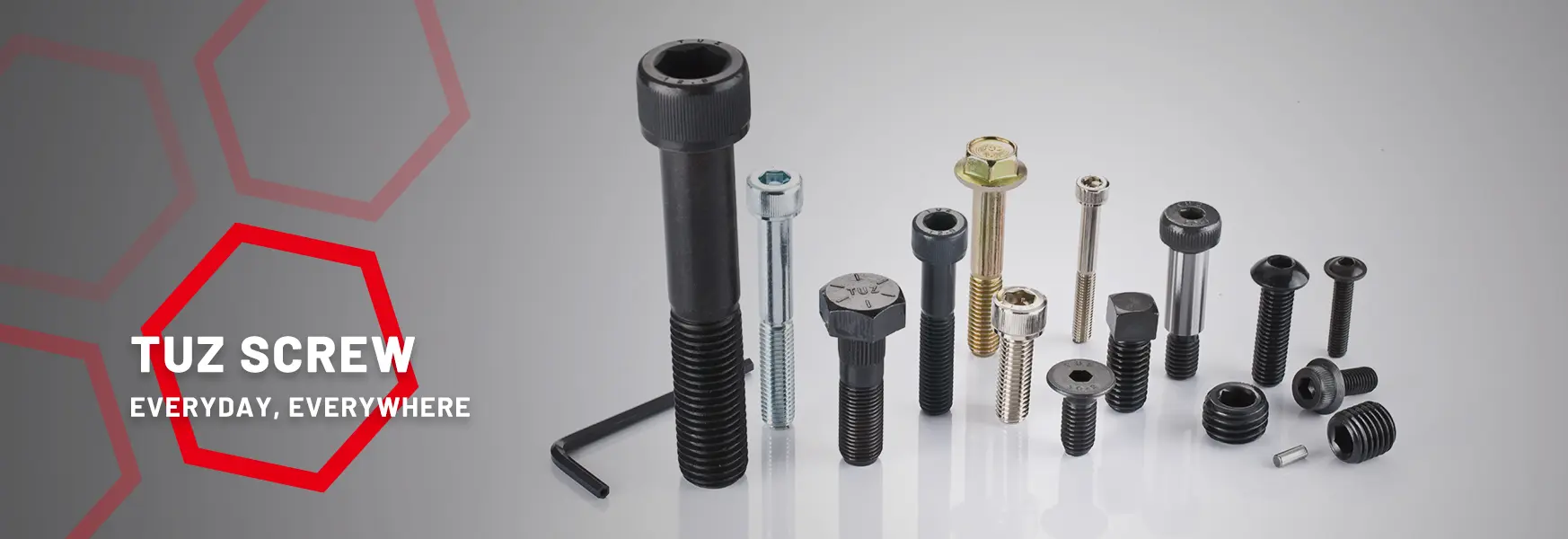
Hex Socket Head Cap Screw
Hex socket head cap screws, or Allen bolts, feature an internal hexagonal recess specifically designed for installation using Allen wrenches, which enables high torque application while minimizing tool disengagement or damage.These screws are typically manufactured from stainless steel or alloy materials, making them particularly strong, durable, and resistant to corrosion. Additionally, their unique internal hexagonal design ensures even load distribution, reduces stress concentration, and facilitates reliable repeated tightening and loosening without damage, making them highly dependable in challenging operational conditions.
Their low-profile cylindrical head design is ideal for applications with limited space, such as precision machinery, automotive components, electronic assemblies, and other equipment where clearance is critical.
Explore TUZ’s hex socket head cap screws with customizable materials, finishes, and sizes to suit your application.
Phillips Head Screw
Phillips head screws feature a cross-shaped recess designed to provide better torque control and reduced stripping compared to slotted screws. Their self-centering recess helps guide the screwdriver tip into position effortlessly, helping prevent driver movement during fastening. This feature allows for rapid, uniform driving of screws, significantly reducing errors, tool wear, and potential material damage.
As a result, Phillips screws greatly enhance the speed and consistency of assembly lines, making them particularly suited for high-volume manufacturing settings such as electronics, appliances, automotive components, and various consumer products. Additionally, variants like Pozidriv and Supadriv further enhance torque efficiency by reducing cam-out.
Hex Head Cap Screw
Hex head cap screws are easily identified by their six-sided heads, which provide excellent grip for tools like wrenches and sockets. This shape allows for high tightening torque while minimizing tool slippage, enabling secure and efficient installation.The broad, flat underside of the hex head allows the screw to sit flush against surfaces, promoting even load distribution across the joint and helping prevent localized stress points. Additionally, the long threaded shank and secure engagement help resist loosening caused by vibration or dynamic forces. These qualities also support reliable handling in demanding conditions, such as low visibility or when gloves are worn.
Hex head cap screws are commonly used in construction, automotive assembly, and heavy equipment manufacturing, where dependable fastening is critical. Explore TUZ’s hex head cap screws with customizable sizes, materials, and finishes for a secure fit across a wide range of industrial applications.
Square Head Set Screw
Square head set screws are defined by their four-sided head, which provides a large contact surface for wrenches or gripping tools. This shape enables strong torque transfer and reduces the risk of tool slippage or head stripping during tightening. The flat surfaces also make alignment and handling easier, especially in outdoor or high-friction environments.Thanks to their mechanical strength and distinct appearance, square head screws are widely used in railways, heavy machinery, and woodworking—applications where a firm, reliable hold is essential. Their vintage look also makes them a popular choice in architectural restorations and antique machinery, where visual consistency matters alongside performance.
Explore TUZ’s square head set screws, available in various sizes and materials to meet both functional and aesthetic demands.
Machine Screw Sizes
Selecting the right machine screw size is essential for optimal fit and structural integrity. Two primary measurement systems are used: metric and imperial, each suited for different applications.
Metric Scale
The metric system labels machine screws with an M, followed by the diameter in millimeters (mm). For example, M6 × 1.0 × 25mm means the screw has a 6 mm diameter, 1 mm thread pitch (distance between threads), and a 25 mm length. Sizes range from miniature M1.6 screws used in electronics to large M20 screws commonly found in heavy machinery, with even larger sizes available for specialized industrial applications. This system is widely used because it provides consistent, precise measurements, allowing easy interchangeability of screws across global manufacturing operations.
Imperial Scale
The imperial system, commonly used in the United States, measures machine screws using numbers (#) for smaller sizes and fractions of an inch for larger ones. The higher the number, the larger the screw diameter, but the number itself doesn’t represent the actual size. Below is a reference chart showing common imperial screw sizes and their actual diameters:
Screw Size Diameter (inches) #6 0.1380" #8 0.1640" #10 0.1900" 1/4" 0.2500" 5/16" 0.3125" 3/8" 0.3750" 7/16" 0.4375" 1/2" 0.5000" 5/8" 0.6250" 3/4" 0.7500" 7/8" 0.8750" 1" 1.0000"
TUZ provides customized screw options in both metric and imperial sizes to meet specific project requirements, ensuring compatibility across regional standards and supporting applications from precision electronics to heavy industrial use.
Conclusion
Choosing the right machine screw is crucial for secure fastening, durability, and performance across different industries. From electronics to heavy machinery, the correct screw type, material, and size ensure structural integrity and long-term reliability. Whether you need hex socket, hex head, or square head screws, TUZ offers tailor-made solutions to fit your specific requirements. Get in touch with us to explore the best machine screw options for your project.